





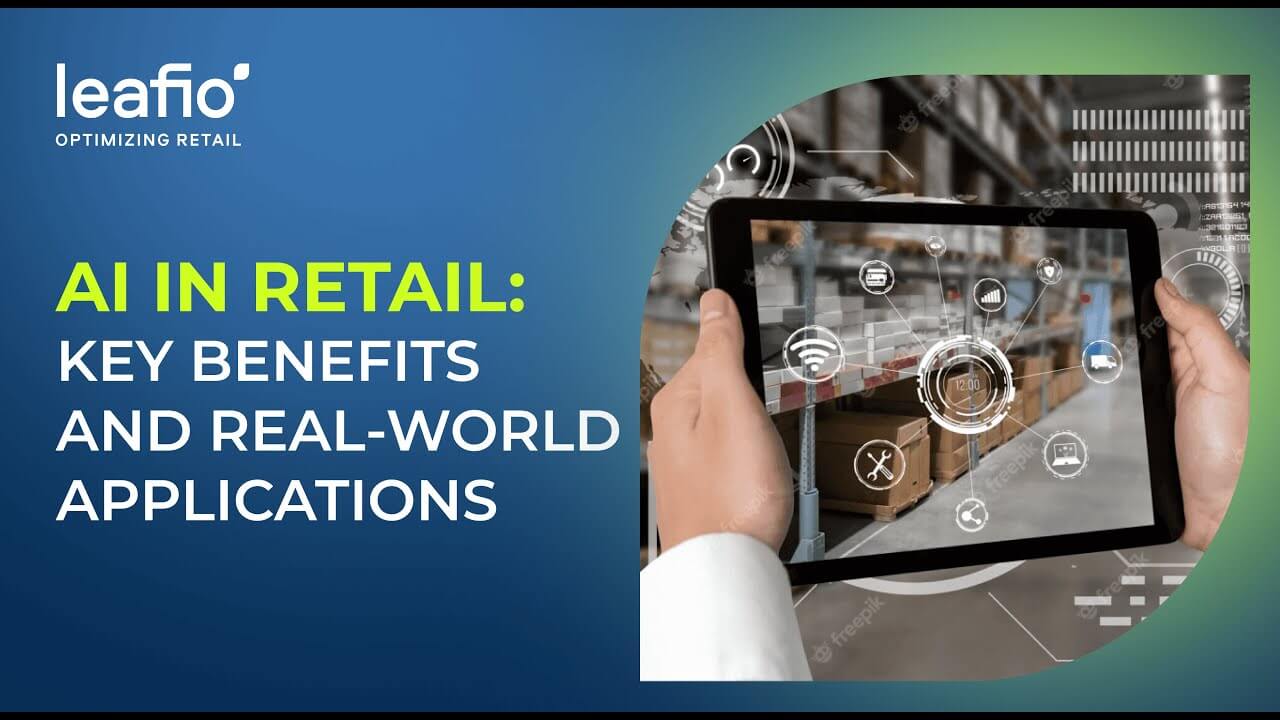
The Art of the Possible in Retail Industry

The following discussion highlights key AI agent types and their transformative potential within the retail sector.
Conversational AI agents
Conversational AI agents, encompassing chatbots and voice assistants, represent a powerful tool for revolutionizing customer service and engagement. These agents engage with customers through natural language, providing instant and human-like responses to inquiries 24/7. For instance, they can answer frequently asked questions, offer product details, track orders, and even guide customers through the return process. In an era where customers expect seamless and timely support, conversational AI agents bridge the gap by providing round-the-clock assistance, significantly reducing response and resolution times. They also learn from every interaction, becoming increasingly adept at understanding customer needs and personalizing conversations. This capability empowers them to proactively suggest relevant products or services, enhance loyalty programs, and encourage repeat purchases. By automating routine inquiries, conversational AI agents free up human staff to focus on more complex issues, leading to improved operational efficiency and greater job satisfaction among employees. Ultimately, these agents empower retailers to build stronger customer relationships by providing prompt, personalized support that caters to individual preferences, regardless of time zone or channel.
Predictive analytics agents
Predictive analytics agents are at the forefront of data-driven decision making, enabling retailers to forecast future trends and customer behavior with remarkable accuracy. These agents leverage advanced machine learning algorithms to analyze vast datasets, including historical sales figures, seasonal patterns, promotional impacts, and external market indicators. This sophisticated analysis allows them to identify subtle trends and predict demand fluctuations that might be missed by traditional methods. For example, they can accurately forecast demand spikes for specific products during seasonal sales or promotional campaigns, informing optimal inventory levels and minimizing stockouts or overstocks. AI-driven inventory management systems have reduced stockouts by 35 percent while increasing sales by 10 percent, according to Tredence. Furthermore, predictive analytics agents can segment customers based on their purchase history and preferences, allowing for highly targeted marketing campaigns and personalized promotions. This proactive approach ensures retailers have the right products available at the right time, minimizing waste, optimizing inventory costs, and enhancing overall profitability. The insights generated by these agents also empower businesses to make informed decisions regarding product development, pricing strategies, and store layouts, ensuring alignment with evolving customer demands.
Task-oriented agents
Task-oriented agents are designed to autonomously handle specific, predefined activities within the retail environment. These agents possess specialized knowledge and expertise in a particular domain, allowing them to perform tasks with meticulous precision and efficiency. For instance, they can be deployed to manage inventory levels in real time, automatically triggering restocking orders when stock falls below a predetermined threshold. This eliminates the need for manual monitoring and significantly reduces the risk of stockouts or overstocking, leading to smoother operations and optimized inventory costs. Task-oriented agents can also streamline various operational processes, such as automating merchandising workflows, processing customer returns, or assisting with order fulfillment. By taking over these repetitive yet crucial tasks, they free up human staff to focus on more strategic initiatives that require human judgment, creativity, or direct customer interaction. This automation not only boosts efficiency and productivity but also reduces the potential for human error, ensuring consistent and high-quality execution of essential retail functions. Ultimately, task-oriented agents contribute to a more agile and responsive retail operation, enabling businesses to adapt quickly to market changes and allocate human resources more effectively.
Fraud detection and security agents
In an increasingly digital retail landscape, safeguarding transactions and protecting sensitive customer data are paramount. Fraud detection and security agents, powered by AI, are essential tools for identifying and mitigating fraudulent activities in real time. These agents continuously monitor vast amounts of transactional data, supplier records, and payment histories for suspicious patterns or anomalies. By leveraging machine learning algorithms, they can detect potential issues like counterfeit goods, billing discrepancies, unauthorized transactions, or even unusual customer behaviors indicative of fraud. For example, if an agent detects multiple failed login attempts or unusually large purchases from a new customer, it can automatically flag the activity for review or even freeze the account to prevent potential losses. PwC reports that AI-powered fraud detection decreases financial fraud in retailers by as much as 50%, according to Mas Callnet India Private Limited. This proactive approach ensures retailers can take swift corrective actions to protect both their financial interests and their customers' security, building trust and safeguarding the brand's reputation. Beyond transaction monitoring, these agents can also be deployed to enhance overall cybersecurity measures, detect potential data breaches, and ensure compliance with relevant data privacy regulations like GDPR or CCPA.
Visual search agents
Visual search agents represent a cutting-edge application of AI in retail, leveraging computer vision technology to redefine how customers discover and explore products. These agents enable customers to find products simply by uploading an image or screenshot, transforming the traditional text-based search experience into a more intuitive and visually driven process. For example, a customer could snap a picture of a stylish outfit they saw on social media and use a visual search agent to find similar items available in a retailer's inventory, complete with pricing, size options, and styling suggestions. This capability significantly enhances product discoverability and allows customers to explore a broader range of options they might have missed through conventional search methods. Visual search agents simplify the discovery and purchase process, leading to a more seamless and engaging shopping journey for the customer. From a retailer's perspective, this translates into increased customer satisfaction, higher conversion rates, and the ability to attract a wider audience seeking intuitive shopping experiences. Moreover, these agents can be integrated into various channels, including websites, mobile apps, and even in-store kiosks, providing a consistent and convenient experience across multiple touchpoints.
Conversational AI agents
Conversational AI agents, including chatbots and voice assistants, revolutionize customer service by offering instant, 24/7 support. They answer questions, track orders, and guide customers through processes, freeing human staff for complex issues. Their ability to learn from interactions enhances personalization, improving loyalty and reducing operational costs.
Predictive analytics agents
Predictive analytics agents utilize AI to forecast retail trends and customer behavior. They analyze sales, market data, and promotions to predict demand, optimizing inventory and pricing. This proactive approach minimizes waste, reduces costs, and enhances profitability by ensuring the right products are available at the right time.
Task-oriented agents
Task-oriented agents automate specific retail operations, like real-time inventory management and merchandising workflows. By handling repetitive tasks, they reduce human error, boost efficiency, and free staff for strategic work. This streamlines operations, making businesses agile and responsive.
Fraud detection and security agents
AI-powered fraud detection and security agents safeguard transactions by monitoring for suspicious patterns in real time. They analyze data to flag potential fraud, unauthorized transactions, or unusual behavior, protecting both finances and reputation. This proactive security approach builds trust and ensures compliance.
Visual search agents
Visual search agents use computer vision to allow customers to find products by uploading images, making product discovery more intuitive. This visual approach expands search capabilities beyond text, leading to increased customer satisfaction and higher conversion rates.
Dynamic pricing optimization agents
Dynamic Pricing AI agents use real-time data to adjust prices, ensuring competitiveness and maximizing revenue. They analyze market shifts, demand, and inventory, making instant adjustments to optimize profitability, particularly during sales or promotions.
Customer segmentation AI agents
Customer Segmentation AI Agents analyze extensive data to identify customer groups and personalize marketing efforts. They integrate various data sources for micro-segmentation, leading to targeted campaigns and product recommendations. This enhances loyalty and optimizes marketing resource allocation.
Supply chain optimization agents
AI-Driven Supply Chain Optimization Agents automate and optimize supply chain functions, from inventory to logistics. They use machine learning to forecast demand, identify risks, and optimize routes, leading to more resilient and cost-effective operations.

Frequently Asked Questions

What is the purpose of this community? What is the purpose of this community?

The purpose of this community is to bring together professionals, researchers, and leaders who are exploring how AI or specifically, Agentic AI can transform retail. Members share knowledge, best practices, and real-world applications to help one another understand and adopt AI-driven solutions.

What are the community guidelines and code of conduct? What are the community guidelines and code of conduct?

All submissions to this community - whether articles, videos, event proposals, or award nominations - are reviewed by moderators before being published. To help us maintain a professional and useful resource for members, please follow these guidelines:

  • Keep content focused on AI agents and their applications in your industry.
  • Ensure your submissions are accurate, fact-based, and well-sourced.
  • Promotional content is welcome only if it provides clear educational or practical value.
  • Respect confidentiality and avoid sharing proprietary or sensitive information without permission.

Our moderation team reserves the right to edit or decline submissions that do not meet these standards.

How do I participate in the community? How do I participate in the community?

Participation is simple: members contribute by submitting content that adds value to the community. You can:

  • Submit articles or whitepapers that highlight use cases of AI agents in your industry.
  • Share videos, research, or presentations that showcase insights, case studies, or practical applications.
  • Nominate yourself or your organization for industry awards.
  • Propose events or webinars that would be useful to fellow members.

All submissions are reviewed by moderators to ensure they are relevant, accurate, and aligned with the community’s focus on AI-driven innovation. Approved content is then published and shared with the wider membership.

How can I join or host community events? How can I join or host community events?

We host webinars, virtual meetups, and roundtables that explore AI applications across industries.

  • To attend, register through the Events page or via invitations sent to members.
  • To propose hosting an event, submit your topic and details to the moderators for review.
  • Event recordings are made available to members after the session.

How do I send nomination for an industry award? How do I send nomination for an industry award?

  • The nominee’s name (individual or organization).
  • A description of their project or contribution.
  • The impact achieved using AI agents.

Self-nominations are welcome.

How are award winners selected? How are award winners selected?

Award winners are chosen through a two-step process:

  • Expert Review - A panel of industry specialists evaluates all submissions against criteria such as innovation, measurable outcomes, scalability, and ethical AI practices.
  • Community Recognition - Shortlisted entries are highlighted for members, giving the broader community a voice in the final outcome.

This ensures winners reflect both expert judgment and industry-wide relevance.

What should I do if I run into technical issues? What should I do if I run into technical issues?

If you have trouble accessing content, submitting materials, or registering for an event, please try standard fixes such as clearing your browser cache or switching to a different browser. If the issue continues, contact us for assistance.

How can I contact support or moderators? How can I contact support or moderators?

If your question is not answered here please use the Support/Contact email below. Our team will respond during standard business hours.
niv@ai4outcome.com
join-the-conversation

Join the Conversation

Thank you for visiting our page! AI4Outcome community is built on shared learning and open dialogue. Join the conversation by sharing your perspectives, success stories, or challenges as we explore how AI is shaping real-world outcomes. Your voice matters, as do your innovations – which we recognize through our annual AI4Outcome Awards, now open for nominations. To engage or contribute, write to niv@ai4outcome.com
